Rule 01
Arrive on time and fueled.
Be at the meetup with enough time to park, check in and attend the rider briefing. Start with a full tank. KSU means kickstands up, not arrival time.
These rules are here for one reason: to help everyone enjoy the ride and get home safely. No ego. No pressure. No need to prove anything.
A smooth group ride starts before the bikes move. Being prepared keeps the group on schedule and reduces avoidable stops.
Be at the meetup with enough time to park, check in and attend the rider briefing. Start with a full tank. KSU means kickstands up, not arrival time.
We review the route, planned stops, group structure, hand signals and anything riders need to know before departure. If you miss the briefing, you miss important information.
Rides may be broken into smaller groups with a designated Captain and Sweeper. Stay with your assigned group unless instructed otherwise.
Bring a charged phone and anything you normally need for a day on the road. Our ride team plans for basic tools and emergency needs, but every rider is responsible for their own motorcycle and gear.
Good formation creates space, visibility and predictable movement. It is not about riding tightly packed together.
On normal roads, riders generally use a staggered formation. The lead rider occupies the left third of the lane, the next rider the right third, and the pattern continues through the group.
Single-file formation gives every rider more maneuvering room. Expect the group to move to single file when conditions require it.
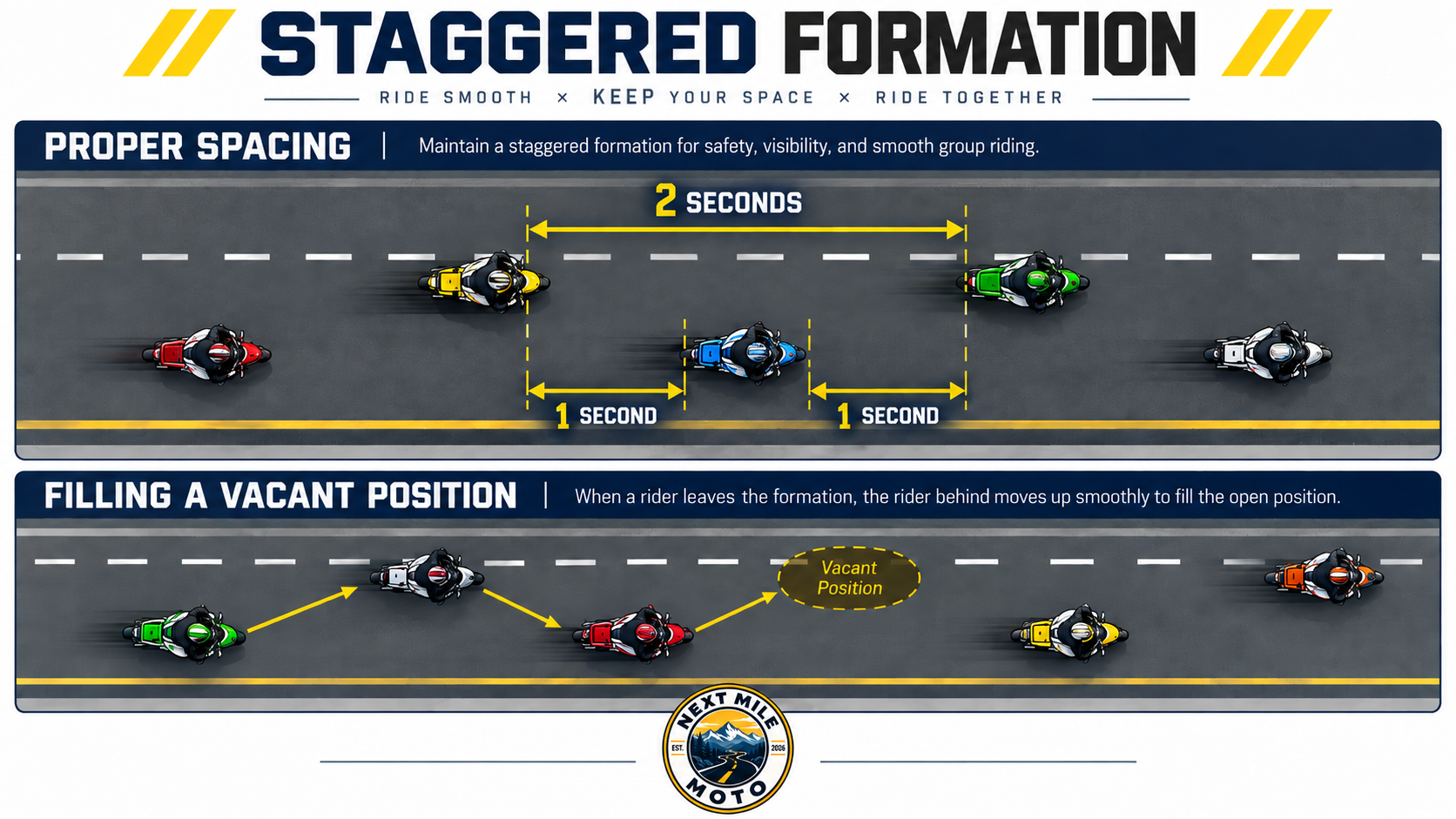
This is the visual reference for how we want riders to hold a staggered formation and how to smoothly fill a vacant position when the rider ahead leaves the group.
A good group does not depend on everyone riding faster. It depends on every rider paying attention to the people around them.
Periodically make sure the rider behind you is still there. If the group begins stretching out, the pace should adjust rather than forcing riders to chase.
If you become separated, do not speed, run lights, cross double yellow lines or ride beyond your ability to catch up. Continue safely and follow the regroup plan.
Do not pass another rider within the same lane. If a space opens because someone leaves the formation, riders should safely re-form instead of racing forward through the group.
Your comfort level matters more than keeping up. Never take a corner, make a pass or ride at a speed you are uncomfortable with because another rider is doing it.
When helmets, wind and spacing make verbal communication impossible, hand signals help the group stay organized. Riders should know the basics before joining a group ride.
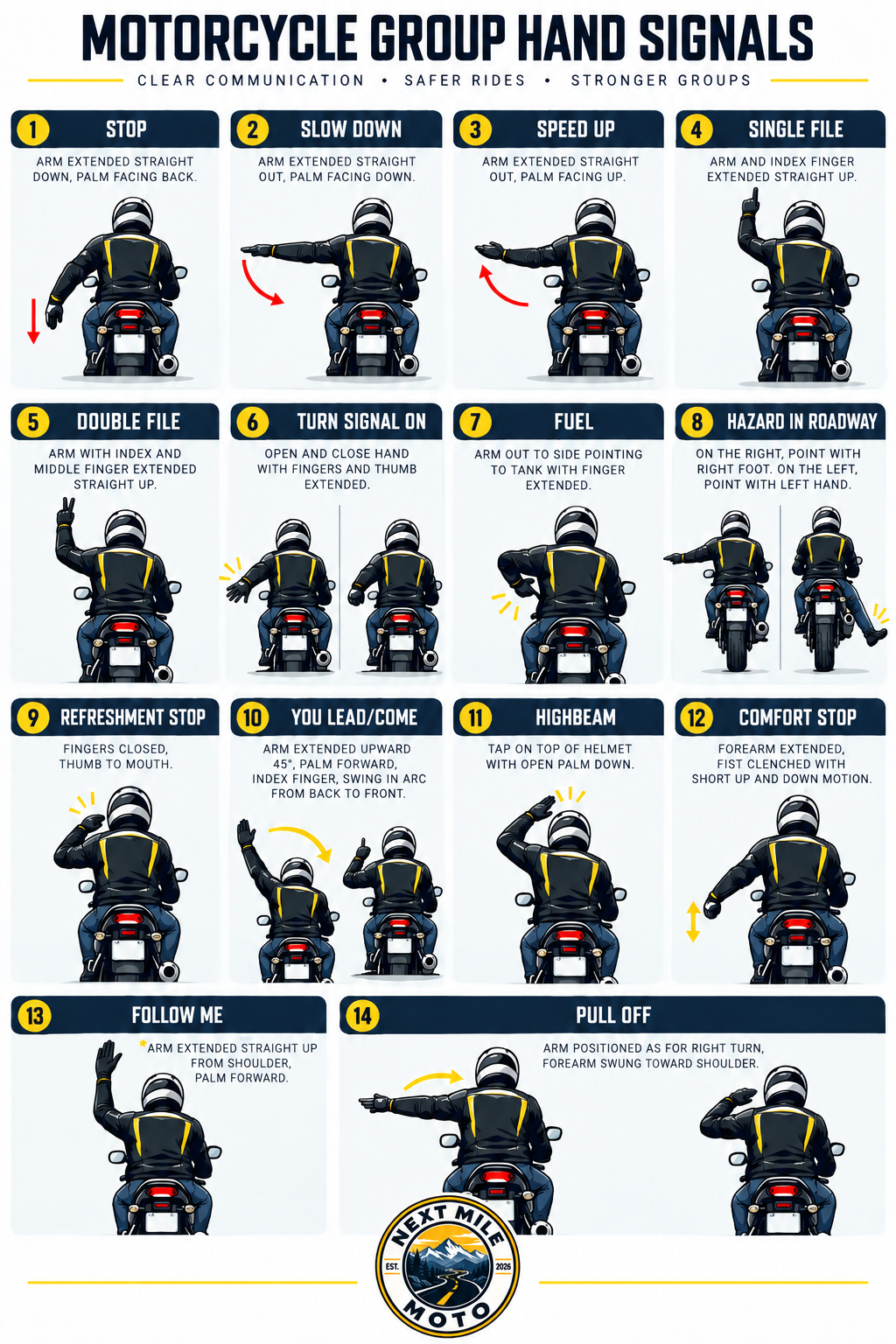
Key group-riding signals include stop, slow down, speed up, single file, double file, turn signal on, fuel, hazard in roadway, refreshment stop, you lead/come, highbeam, comfort stop, follow me, and pull off.
These are the standards we expect from anyone riding with us.
This is a group ride, not a competition. Save aggressive riding for the appropriate environment.
Nobody needs to prove how fast they are, what they ride or how experienced they are.
We organize rides around Captains, Sweepers, communication and planned regroup points.
Group riding does not create an exception to traffic laws. Every rider remains responsible for their own decisions.
They are there to manage the group and respond to issues. Follow their direction during the ride.
If you plan to split from the group, tell the Captain or Sweeper whenever possible so nobody thinks you are missing or in trouble.
These standards are informed by the Motorcycle Safety Foundation’s Group Riding guidance. Read the original MSF guidance at msf-usa.org.